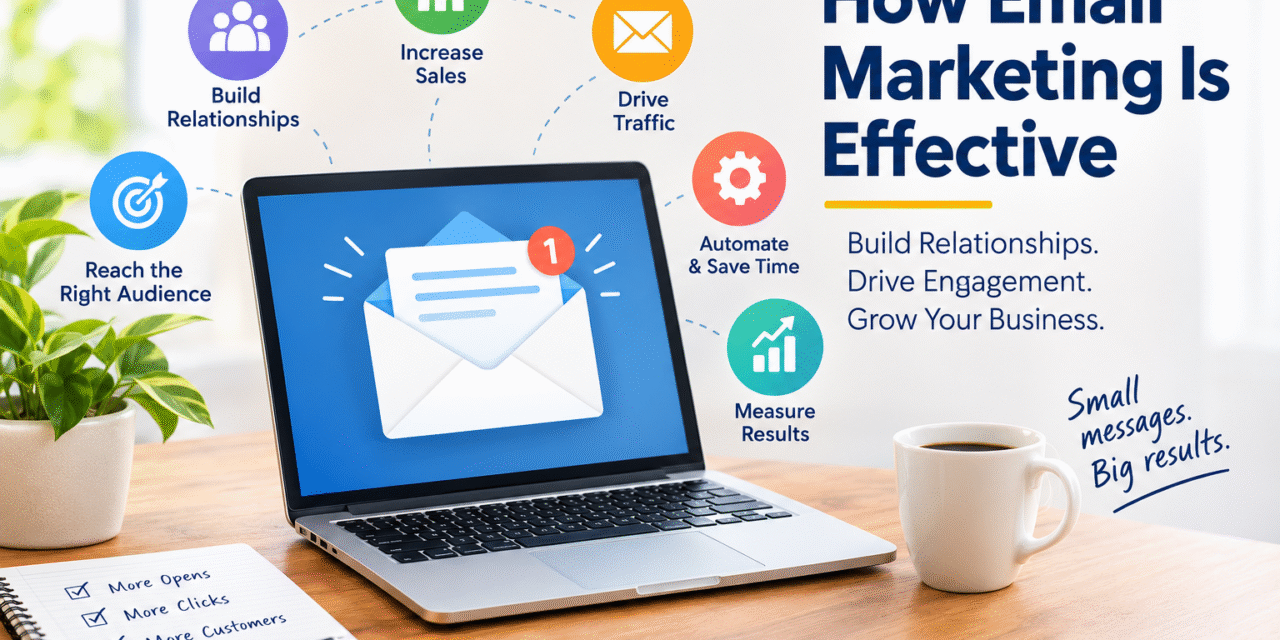
In today’s evolving digital landscape, email marketing offers a powerful way for businesses to connect with and engage their audiences. As digital communication becomes increasingly integral to consumer interaction, understanding how to harness email marketing’s potential can pave the way for significant growth and stronger customer loyalty. This blog post explores the facets of email marketing that drive its power, focusing on audience targeting, personalization, cost efficiency, and measurable outcomes.
One of the biggest advantages of email marketing is its ability to deliver targeted messages. Unlike traditional marketing approaches, email lets businesses segment their audience by criteria such as demographics, purchasing behaviors, and engagement metrics. For instance, you can develop tailored segments for new customers, loyal clients, and those who have become less active. This targeted strategy ensures that meaningful messages reach the appropriate recipients. By customizing emails for specific audience segments, businesses are likely to see higher open and conversion rates, as the content better aligns with recipients’ interests and needs.
Another essential aspect that enhances email marketing effectiveness is personalization. Today’s consumers increasingly expect brands to engage with them in a personalized manner. By leveraging data analytics, organizations can gain valuable insights into customer preferences and previous interactions. This information allows marketers to create highly relevant email campaigns that resonate with individual recipients. For example, you might send personalized birthday offers to customers to show appreciation and boost purchase motivation. Research indicates that personalized emails can increase open rates by 26% and revenue by 760%, underscoring the impact of this strategic approach.
Cost efficiency is another noteworthy feature of email marketing. Compared with traditional marketing channels such as print advertisements and television commercials, email marketing offers a budget-friendly way to reach a broad audience. Platforms such as GetResponse let businesses create and send emails at minimal cost. Industry reports suggest that every dollar spent on email marketing can generate an average return on investment of approximately $42. This impressive ROI makes email marketing an attractive prospect, especially for small to medium-sized businesses that seek to maximize their marketing efforts.
Email marketing not only serves as a powerful tool for lead nurturing but also plays a crucial role in maintaining customer relationships. By designing a thoughtful email sequence, businesses can guide potential customers through their purchasing journey, providing relevant information and appealing offers at each stage. For example, an e-commerce brand might implement a welcome series for new subscribers, followed by informative content, testimonials, and promotional offers. This relationship-building process fosters trust and enhances the likelihood of conversions, effectively transforming prospects into loyal customers.
Additionally, email marketing functions as a significant driver of customer retention. Engaging existing customers via email is often more cost-effective than acquiring new clients. Regular newsletters, exclusive offers, and loyalty rewards can sustain customer interest and engagement over time. For instance, a brand might give long-standing customers early access to new products or special discounts, reinforcing their value and motivating repeat purchases. Research indicates that improving customer retention rates by just 5% can increase profits by 25% to 95%. This highlights the potential benefits of cultivating long-term relationships through email.
Measuring and analyzing email marketing outcomes adds another layer of effectiveness to this strategy. Contrary to many traditional advertising methods, email marketing offers comprehensive insights into campaign performance. Key metrics such as open rates, click-through rates, conversion rates, and bounce rates help marketers assess strategy effectiveness and make informed decisions. If a campaign underperforms, marketers can quickly identify the factors at play, whether related to content or execution. This emphasis on tracking and analyzing results supports continuous improvement, allowing businesses to optimize their marketing efforts over time.
Furthermore, integrating automation into email marketing amplifies its effectiveness. Automated campaigns enable organizations to engage customers based on specific triggers, such as sign-ups or abandoned carts. For example, when a customer adds items to their cart but doesn’t complete the purchase, a timely reminder email can encourage them to complete the order. This proactive approach can significantly reduce cart abandonment rates and recover lost revenue.
In conclusion, email marketing is effective because it reaches targeted audiences, delivers personalized content, and provides measurable results while remaining cost-efficient. By implementing well-thought-out strategies, businesses of all sizes can use email marketing to build stronger customer relationships, boost engagement, and drive conversions. As the technological landscape continues to advance, mastering email marketing will be essential for marketers aspiring to maintain a competitive advantage. By prioritizing personalization, leveraging data analytics, and embracing automation, businesses can strengthen their email marketing while achieving sustained growth and success in today’s marketplace. Given the compelling evidence supporting its effectiveness, email marketing should remain a core component of any comprehensive marketing strategy.







Your writing style is so engaging and easy to read It makes it a pleasure to read your blog and…
I was more than happy to search out this net-site.I needed to thanks for your time for this excellent learn!!…
Usually I do not read article on blogs, but I would like to say that this write-up very compelled me…
Hello, i believe that i noticed you visited my website thus i came to “return the choose”.I'm attempting to find…
Thanks for sharing. I read many of your blog posts, cool, your blog is very good.