In today’s competitive digital landscape, businesses need reliable ways to communicate with customers, build relationships, and generate sales. Why email marketing is important is a question many beginners and business owners ask when deciding where to invest their marketing budget. Email remains one of the most practical digital marketing channels because it allows businesses to communicate directly with people who have already shown interest in their products, services, or content. Unlike social media, where algorithms determine who sees your posts, email gives you a direct communication channel with your audience.
What Is Email Marketing?
Email marketing is the practice of sending targeted emails to customers, subscribers, prospects, or leads. These emails can be used for different purposes, including promoting products, sharing educational content, announcing offers, welcoming new subscribers, nurturing leads, and maintaining customer relationships.
A typical email marketing strategy may include newsletters, promotional campaigns, welcome emails, abandoned-cart emails, product recommendations, educational emails, and automated follow-up sequences.
The objective is not simply to send as many emails as possible. Successful email marketing focuses on sending the right message to the right person at the right time.
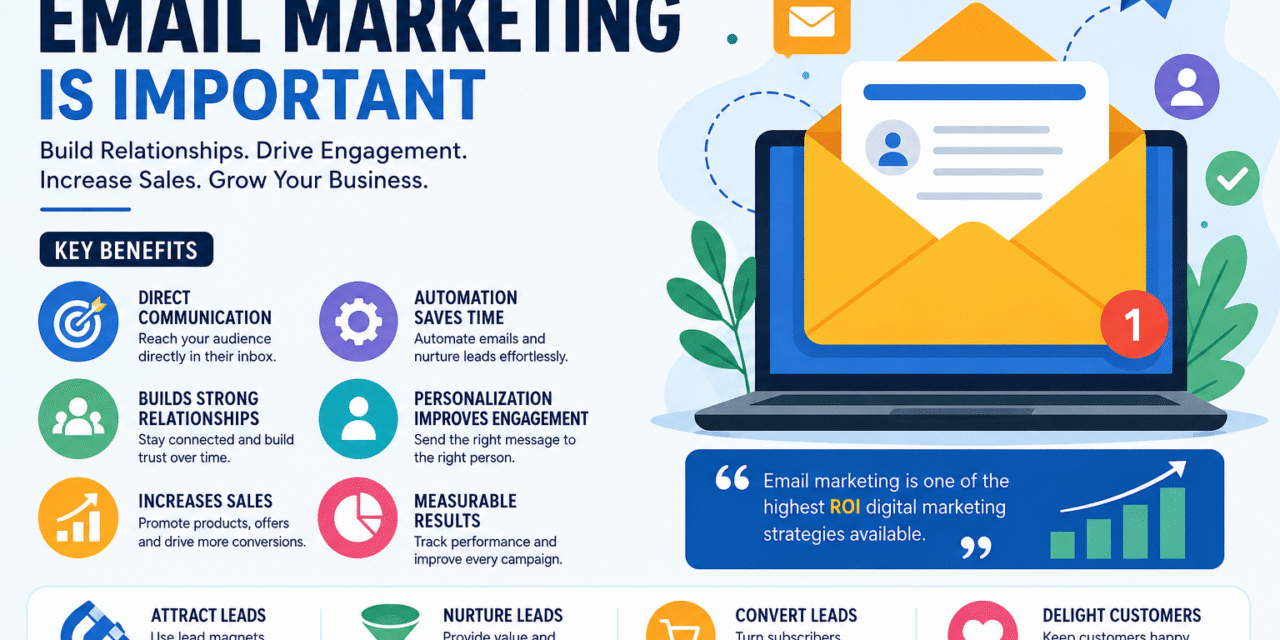
 1. Direct Communication With Your Audience
One of the biggest advantages of email marketing is direct communication. When someone subscribes to your email list, you have permission to communicate with that person through their inbox.
This creates an opportunity to develop a relationship over time. Instead of relying entirely on advertisements or social media posts, you can regularly provide useful information directly to subscribers.
For example, an SEO blog could send subscribers weekly tips about keyword research, technical SEO, content marketing, and Google Search Console. Over time, subscribers may begin to recognize the brand as a useful source of information.
2. Builds Strong Customer Relationships
Successful marketing is not only about making immediate sales. It is also about building relationships.
Email allows businesses to stay connected with customers after they make a purchase. You can send helpful tutorials, product usage tips, educational resources, special offers, and customer appreciation messages.
A consistent email strategy keeps your brand familiar without requiring customers to visit your website every day.
Trust develops when subscribers consistently receive useful and relevant information rather than being exposed to constant promotional messages.
3. Personalization Improves Engagement
Personalization is one of the most powerful elements of modern email marketing.
Instead of sending exactly the same message to everyone, marketers can customize emails according to subscriber information, interests, behavior, purchase history, location, or stage in the customer journey.
For example, an online store can recommend products based on what a customer previously purchased. A digital marketing website could send beginners content about SEO fundamentals while sending experienced marketers advanced content about automation and conversion optimization.
Personalization can also be as simple as using a subscriber’s first name in the subject line or email greeting. More advanced personalization involves dynamic content, behavioral triggers, product recommendations, and personalized offers.
The goal is to make the subscriber feel that the email was created for their needs rather than being a generic advertisement.
4. Email Marketing Can Increase Sales
Email can directly support revenue generation. Businesses can use promotional campaigns to introduce new products, announce discounts, promote seasonal sales, and encourage repeat purchases.
For example, an eCommerce business might send a series of emails when launching a new product:
An announcement email introducing the product
An educational email explaining its benefits
A customer testimonial email
A limited-time promotional email
A final reminder before the offer ends
This approach gives customers multiple opportunities to understand the product and make a purchasing decision.
However, effective selling requires balance. If every email asks subscribers to buy something, they may lose interest or unsubscribe. Combining promotional content with educational and valuable content creates a healthier long-term relationship.
5. Automation Saves Time
Email automation allows marketers to create campaigns that operate automatically based on specific triggers or conditions.
For example, when someone subscribes to your newsletter, an automated workflow can send a welcome email immediately. A second email can be sent two days later, followed by educational content and eventually a product recommendation.
Other common automated campaigns include:
Welcome sequences
Lead nurturing campaigns
Abandoned-cart emails
Birthday emails
Re-engagement campaigns
Post-purchase follow-ups
Product recommendation emails
Automation reduces repetitive work while helping businesses communicate with subscribers consistently.
6. Helps Generate and Nurture Leads
Not every website visitor is ready to purchase immediately. Some people need more information before making a decision.
Email marketing helps businesses nurture these potential customers.
A company can offer a valuable lead magnet, such as an ebook, checklist, template, webinar, or free guide, in exchange for a visitor’s email address. After the person subscribes, the business can provide useful content through an automated email sequence.
For example, a digital marketing consultant could offer a free SEO checklist. After downloading it, the subscriber might receive emails about keyword research, on-page SEO, link building, and SEO audits before eventually receiving an offer for consulting services.
This process moves prospects through the customer journey gradually.
7. Email Marketing Is Measurable
Another reason why email marketing is important is its measurability.
Most professional email marketing platforms provide performance data that helps marketers understand how campaigns are performing. Important metrics include:
Open rate
Click-through rate
Conversion rate
Bounce rate
Unsubscribe rate
Revenue generated
List growth
Engagement rate
These metrics allow marketers to identify what works and what needs improvement.
For example, if an email receives many opens but very few clicks, the subject line may be effective while the email content or call-to-action needs improvement.
8. Supports Customer Retention
Acquiring a new customer can require significant marketing effort. Keeping existing customers engaged can therefore be extremely valuable.
Regular email communication can encourage previous customers to return, discover new products, or take advantage of special offers.
A personalized post-purchase email can thank the customer, explain how to use the product, and recommend complementary products. This creates additional opportunities while improving the overall customer experience.
9. Gives Businesses More Control
Social media platforms can change their algorithms, advertising policies, or organic reach at any time. Businesses that depend entirely on social platforms may find it difficult to consistently reach their audience.
An email list provides greater control over communication. While deliverability and permission requirements still matter, businesses are not completely dependent on a social media algorithm to reach subscribers.
This makes building an email list a valuable long-term digital marketing asset.
10. Works Well With Other Marketing Channels
Email does not have to operate independently. It can work together with SEO, social media, content marketing, paid advertising, and eCommerce.
For example, SEO can attract visitors to a website, while an email signup form converts some of those visitors into subscribers. Social media can promote valuable content, while email can nurture the people who subscribe. Paid advertising can promote a lead magnet, which then feeds prospects into an automated email sequence.
This creates an integrated marketing system instead of relying on one channel.
Best Practices for Successful Email Marketing
To get better results, businesses should follow a few important practices.
First, build a permission-based email list instead of purchasing random email addresses. Second, provide value consistently. Third, segment subscribers according to their interests and behavior. Fourth, personalize content whenever possible.
Marketers should also write compelling subject lines, use clear calls-to-action, optimize emails for mobile devices, and test different versions of their campaigns.
A/B testing can help compare subject lines, layouts, offers, CTAs, and email copy. Monitoring results allows marketers to continuously improve their strategy.
Conclusion
Understanding why email marketing is important helps businesses recognize that email is more than a promotional communication channel. It can help attract leads, nurture prospects, build relationships, personalize customer experiences, increase sales, improve retention, and support long-term business growth.
The most successful strategies focus on relevance and value rather than sending large volumes of promotional messages. By combining segmentation, personalization, automation, valuable content, and consistent measurement, businesses can create meaningful relationships with subscribers.
Whether you are a blogger, freelancer, startup, eCommerce business, or established company, building and maintaining a quality email list can become an important part of your overall digital marketing strategy.
1. Direct Communication With Your Audience
One of the biggest advantages of email marketing is direct communication. When someone subscribes to your email list, you have permission to communicate with that person through their inbox.
This creates an opportunity to develop a relationship over time. Instead of relying entirely on advertisements or social media posts, you can regularly provide useful information directly to subscribers.
For example, an SEO blog could send subscribers weekly tips about keyword research, technical SEO, content marketing, and Google Search Console. Over time, subscribers may begin to recognize the brand as a useful source of information.
2. Builds Strong Customer Relationships
Successful marketing is not only about making immediate sales. It is also about building relationships.
Email allows businesses to stay connected with customers after they make a purchase. You can send helpful tutorials, product usage tips, educational resources, special offers, and customer appreciation messages.
A consistent email strategy keeps your brand familiar without requiring customers to visit your website every day.
Trust develops when subscribers consistently receive useful and relevant information rather than being exposed to constant promotional messages.
3. Personalization Improves Engagement
Personalization is one of the most powerful elements of modern email marketing.
Instead of sending exactly the same message to everyone, marketers can customize emails according to subscriber information, interests, behavior, purchase history, location, or stage in the customer journey.
For example, an online store can recommend products based on what a customer previously purchased. A digital marketing website could send beginners content about SEO fundamentals while sending experienced marketers advanced content about automation and conversion optimization.
Personalization can also be as simple as using a subscriber’s first name in the subject line or email greeting. More advanced personalization involves dynamic content, behavioral triggers, product recommendations, and personalized offers.
The goal is to make the subscriber feel that the email was created for their needs rather than being a generic advertisement.
4. Email Marketing Can Increase Sales
Email can directly support revenue generation. Businesses can use promotional campaigns to introduce new products, announce discounts, promote seasonal sales, and encourage repeat purchases.
For example, an eCommerce business might send a series of emails when launching a new product:
An announcement email introducing the product
An educational email explaining its benefits
A customer testimonial email
A limited-time promotional email
A final reminder before the offer ends
This approach gives customers multiple opportunities to understand the product and make a purchasing decision.
However, effective selling requires balance. If every email asks subscribers to buy something, they may lose interest or unsubscribe. Combining promotional content with educational and valuable content creates a healthier long-term relationship.
5. Automation Saves Time
Email automation allows marketers to create campaigns that operate automatically based on specific triggers or conditions.
For example, when someone subscribes to your newsletter, an automated workflow can send a welcome email immediately. A second email can be sent two days later, followed by educational content and eventually a product recommendation.
Other common automated campaigns include:
Welcome sequences
Lead nurturing campaigns
Abandoned-cart emails
Birthday emails
Re-engagement campaigns
Post-purchase follow-ups
Product recommendation emails
Automation reduces repetitive work while helping businesses communicate with subscribers consistently.
6. Helps Generate and Nurture Leads
Not every website visitor is ready to purchase immediately. Some people need more information before making a decision.
Email marketing helps businesses nurture these potential customers.
A company can offer a valuable lead magnet, such as an ebook, checklist, template, webinar, or free guide, in exchange for a visitor’s email address. After the person subscribes, the business can provide useful content through an automated email sequence.
For example, a digital marketing consultant could offer a free SEO checklist. After downloading it, the subscriber might receive emails about keyword research, on-page SEO, link building, and SEO audits before eventually receiving an offer for consulting services.
This process moves prospects through the customer journey gradually.
7. Email Marketing Is Measurable
Another reason why email marketing is important is its measurability.
Most professional email marketing platforms provide performance data that helps marketers understand how campaigns are performing. Important metrics include:
Open rate
Click-through rate
Conversion rate
Bounce rate
Unsubscribe rate
Revenue generated
List growth
Engagement rate
These metrics allow marketers to identify what works and what needs improvement.
For example, if an email receives many opens but very few clicks, the subject line may be effective while the email content or call-to-action needs improvement.
8. Supports Customer Retention
Acquiring a new customer can require significant marketing effort. Keeping existing customers engaged can therefore be extremely valuable.
Regular email communication can encourage previous customers to return, discover new products, or take advantage of special offers.
A personalized post-purchase email can thank the customer, explain how to use the product, and recommend complementary products. This creates additional opportunities while improving the overall customer experience.
9. Gives Businesses More Control
Social media platforms can change their algorithms, advertising policies, or organic reach at any time. Businesses that depend entirely on social platforms may find it difficult to consistently reach their audience.
An email list provides greater control over communication. While deliverability and permission requirements still matter, businesses are not completely dependent on a social media algorithm to reach subscribers.
This makes building an email list a valuable long-term digital marketing asset.
10. Works Well With Other Marketing Channels
Email does not have to operate independently. It can work together with SEO, social media, content marketing, paid advertising, and eCommerce.
For example, SEO can attract visitors to a website, while an email signup form converts some of those visitors into subscribers. Social media can promote valuable content, while email can nurture the people who subscribe. Paid advertising can promote a lead magnet, which then feeds prospects into an automated email sequence.
This creates an integrated marketing system instead of relying on one channel.
Best Practices for Successful Email Marketing
To get better results, businesses should follow a few important practices.
First, build a permission-based email list instead of purchasing random email addresses. Second, provide value consistently. Third, segment subscribers according to their interests and behavior. Fourth, personalize content whenever possible.
Marketers should also write compelling subject lines, use clear calls-to-action, optimize emails for mobile devices, and test different versions of their campaigns.
A/B testing can help compare subject lines, layouts, offers, CTAs, and email copy. Monitoring results allows marketers to continuously improve their strategy.
Conclusion
Understanding why email marketing is important helps businesses recognize that email is more than a promotional communication channel. It can help attract leads, nurture prospects, build relationships, personalize customer experiences, increase sales, improve retention, and support long-term business growth.
The most successful strategies focus on relevance and value rather than sending large volumes of promotional messages. By combining segmentation, personalization, automation, valuable content, and consistent measurement, businesses can create meaningful relationships with subscribers.
Whether you are a blogger, freelancer, startup, eCommerce business, or established company, building and maintaining a quality email list can become an important part of your overall digital marketing strategy.
Why Email Marketing Is Important: A Complete Guide for Businesses









Your writing style is so engaging and easy to read It makes it a pleasure to read your blog and…
I was more than happy to search out this net-site.I needed to thanks for your time for this excellent learn!!…
Usually I do not read article on blogs, but I would like to say that this write-up very compelled me…
Hello, i believe that i noticed you visited my website thus i came to “return the choose”.I'm attempting to find…
Thanks for sharing. I read many of your blog posts, cool, your blog is very good.