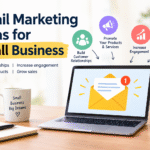
Email marketing is one of the most effective ways to build relationships with an audience, promote products or services, and generate consistent business results. But becoming good at email marketing requires more than simply sending emails. You need to understand your audience, create valuable content, build a quality email list, write engaging messages, and measure your results.
If you are wondering how to master email marketing, the best approach is to learn the fundamentals first and then practice each skill consistently. In this guide, you will learn the key areas you need to focus on to become confident and effective at email marketing.
What Does It Mean to Master Email Marketing?
Mastering email marketing means understanding how to use email strategically to achieve a specific goal.
That could be:
- Growing an email subscriber list
- Building relationships with potential customers
- Increasing website traffic
- Promoting products or services
- Generating sales
- Improving customer retention
- Building brand awareness
A successful email marketer does not simply send promotional emails. Instead, they understand what subscribers want and provide the right message at the right time.
You do not need to learn everything at once. Start with the basics, practice regularly, analyze your results, and improve your campaigns over time.
1. Learn the Fundamentals of Email Marketing
The first step in mastering email marketing is understanding the basic concepts.
You should know what an email list is, how subscribers join your list, and how businesses communicate with subscribers.
Important concepts include:
- Email lists
- Lead magnets
- Opt-in forms
- Landing pages
- Double opt-in
- Email segmentation
- Personalization
- Email automation
- Drip campaigns
- Newsletters
- Promotional emails
- Transactional emails
- Email deliverability
- Open rate
- Click-through rate
- Conversion rate
- Bounce rate
- Unsubscribe rate
- Email marketing ROI
- A/B testing
Once you understand these concepts, it becomes much easier to create effective campaigns.
2. Build a Quality Email List
Your email list is one of your most valuable marketing assets.
However, having thousands of subscribers does not automatically mean you have a successful email marketing strategy. A smaller list of engaged subscribers can be more valuable than a large list of people who never open your emails.
The best way to build your list is through permission-based methods.
For example, you can offer a useful lead magnet such as:
- An ebook
- Checklist
- Free guide
- Template
- Email course
- Webinar
- Free consultation
- Discount or special offer
Place signup forms on relevant pages of your website and clearly explain what subscribers will receive.
Avoid buying email lists. Purchased lists can contain uninterested or invalid contacts and may damage your sender reputation.
Focus on attracting people who are genuinely interested in your topic, product, or service.
3. Understand Your Target Audience
Great email marketing starts with understanding your audience.
Before writing an email, ask yourself:
Who am I writing to?
You should understand your subscribers’ problems, goals, interests, questions, and buying behavior.
For example, if your audience consists of beginner bloggers, they may be interested in topics such as SEO, content creation, website traffic, and monetization.
If you understand their needs, you can create emails that feel relevant instead of generic.
Create a simple customer profile that includes:
- Age range
- Profession
- Main interests
- Problems
- Goals
- Buying motivations
- Common questions
The better you understand your audience, the easier it becomes to create useful email content.
4. Learn Email Copywriting
Copywriting is one of the most important skills you can develop.
Your subscribers receive many emails every day. Your email needs to quickly communicate why they should pay attention.
Start with a strong subject line.
Instead of writing:
Our New Product Is Available
You could write:
Want to save 3 hours every week?
The second subject line creates curiosity and focuses on a potential benefit.
Your email should also be easy to read. Use short paragraphs, simple language, headings, bullet points, and clear calls to action.
Most importantly, write for your reader rather than trying to sound overly professional.
Your email should answer one important question:
Why should the subscriber care?
5. Master Personalization
Personalization is more than adding someone’s first name to an email.
Effective personalization means making the content more relevant to the subscriber.
For example, you can personalize emails based on:
- Previous purchases
- Pages visited
- Content downloaded
- Location
- Interests
- Previous email interactions
- Stage in the customer journey
Suppose someone downloads a beginner’s guide to SEO. Instead of immediately sending them unrelated product promotions, you could send a series of emails about keyword research, on-page SEO, and content optimization.
Relevant communication can make subscribers feel that your emails are written specifically for their needs.
6. Learn Email Segmentation
As your email list grows, not every subscriber will have the same needs.
This is why segmentation is important.
Segmentation means dividing your audience into smaller groups based on specific characteristics or behavior.
For example, you could create segments for:
- New subscribers
- Existing customers
- Potential customers
- Highly engaged subscribers
- Inactive subscribers
- Product-specific customers
- Subscribers interested in a particular topic
You can then send more relevant messages to each group.
For example, a new subscriber might receive a welcome sequence, while an existing customer might receive product tips or cross-sell recommendations.
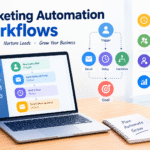
7. Understand Email Automation
Automation allows you to send emails automatically based on specific actions or conditions.
This can save time and create a consistent subscriber experience.
Common automated campaigns include:
Welcome Series
When someone joins your list, automatically send a series of emails introducing yourself, your business, and your content.
Lead Nurturing Sequence
Provide useful information over several emails and gradually move subscribers toward a product or service.
Abandoned Cart Emails
Remind customers about products they added to their shopping cart but did not purchase.
Post-Purchase Emails
Thank customers, provide product information, request feedback, or recommend related products.
Re-engagement Campaigns
Send targeted emails to subscribers who have not interacted with your emails for a certain period.
Automation is one of the areas that can take your email marketing from basic to advanced.
8. Choose the Right Email Marketing Platform
An email marketing platform helps you manage subscribers, create campaigns, build forms, automate emails, and track performance.
Popular platforms include:
- GetResponse
- AWeber
- Mailchimp
- HubSpot
- ActiveCampaign
- Kit
When choosing a platform, consider your requirements, budget, audience size, automation needs, integrations, and reporting features.
If you are a beginner, choose a platform that is easy to understand and provides the features you need without unnecessary complexity.
9. Create Valuable Content
One of the biggest mistakes marketers make is sending promotional emails all the time.
Your subscribers should receive useful information, not just sales messages.
You can send:
- Educational tips
- How-to guides
- Industry news
- Case studies
- Tutorials
- Checklists
- Useful resources
- Product updates
- Special offers
A simple approach is to follow the principle:
Educate first, sell second.
When you consistently provide value, subscribers are more likely to trust your recommendations when you eventually promote a product or service.
10. Improve Your Email Deliverability
Even a beautifully written email is useless if it does not reach the inbox.
Email deliverability refers to your ability to successfully deliver emails to subscribers’ inboxes.
To improve deliverability:
- Use permission-based email lists
- Avoid purchasing subscribers
- Remove invalid addresses
- Monitor bounce rates
- Make it easy for people to unsubscribe
- Avoid misleading subject lines
- Maintain consistent sending practices
- Monitor engagement
- Authenticate your sending domain
You should also regularly clean inactive subscribers from your list when appropriate.
A healthy email list is generally more valuable than a large but inactive one.
11. Learn Email Marketing Metrics
You cannot master email marketing without measuring performance.
Important metrics include:
Open Rate
This indicates how many recipients opened your email. However, open-rate measurement can be affected by privacy features and technical factors, so it should not be viewed in isolation.
Click-Through Rate
This measures how many recipients clicked links in your email.
Conversion Rate
This tells you how many recipients completed your desired action, such as purchasing a product or signing up for a service.
Bounce Rate
This measures emails that could not be delivered.
Unsubscribe Rate
This shows how many subscribers chose to leave your list.
Revenue
For commercial campaigns, revenue and profit are ultimately more important than vanity metrics.
Look at several metrics together to understand what is actually happening.
12. Practice A/B Testing
A/B testing allows you to compare two versions of an email to determine which performs better.
You could test:
- Subject lines
- Calls to action
- Email length
- Images
- Headlines
- Offers
- Sending times
For example, you could send one subject line to one portion of your audience and another subject line to another portion.
The results can help you understand what your audience responds to.
Do not test too many things at once. Start with one variable so you can better understand the result.
13. Study Email Marketing Examples
One of the best ways to improve your skills is to study emails from successful brands.
Pay attention to:
- Subject lines
- Opening sentences
- Email structure
- Storytelling
- Calls to action
- Personalization
- Offers
- Email frequency
Ask yourself why the email caught your attention and what action the sender wants you to take.
You can also create a swipe file where you save interesting subject lines, email structures, and campaign ideas for future inspiration.
14. Develop a Consistent Email Strategy
Consistency is important.
You do not need to email your subscribers every day. Instead, choose a realistic schedule that you can maintain.
For example, you could send:
- One educational email every week
- One newsletter every week
- Promotional emails when you have a relevant offer
The ideal frequency depends on your audience and business.
The key is to set expectations when people subscribe and then deliver consistently.
15. Keep Learning and Experimenting
Email marketing continues to evolve.
New tools, automation features, privacy changes, AI capabilities, and customer expectations can affect how marketers work.
Make learning a regular habit.
You can:
- Read email marketing blogs
- Study successful campaigns
- Take online courses
- Follow industry experts
- Experiment with different email formats
- Analyze your own campaign data
- Test new automation ideas
You do not need to implement every new trend. Focus on changes that can genuinely improve your results.
A Simple Roadmap to Master Email Marketing
If you are starting from scratch, follow this learning path:
Step 1: Learn email marketing fundamentals.
Step 2: Choose an email marketing platform.
Step 3: Build a permission-based email list.
Step 4: Create a lead magnet.
Step 5: Set up an opt-in form and landing page.
Step 6: Create a welcome email sequence.
Step 7: Learn copywriting and subject-line writing.
Step 8: Learn segmentation and personalization.
Step 9: Build automated campaigns.
Step 10: Study deliverability.
Step 11: Track your metrics.
Step 12: Start A/B testing.
Step 13: Analyze your results.
Step 14: Improve your campaigns continuously.
The important thing is to practice each step rather than simply reading about it.
Final Thoughts
Learning how to master email marketing is a process, not something you accomplish in a single course or tutorial. The most successful email marketers combine knowledge, creativity, testing, and data.
Start by understanding your audience and building a quality email list. Then learn copywriting, segmentation, personalization, automation, deliverability, and analytics.
Most importantly, keep experimenting.
Your first campaigns may not produce outstanding results, and that is completely normal. Every campaign gives you information about your audience. Use that information to improve your next email.
With consistent learning and practice, you can turn email marketing into a powerful channel for building relationships, generating leads, and growing your business.




Your writing style is so engaging and easy to read It makes it a pleasure to read your blog and…
I was more than happy to search out this net-site.I needed to thanks for your time for this excellent learn!!…
Usually I do not read article on blogs, but I would like to say that this write-up very compelled me…
Hello, i believe that i noticed you visited my website thus i came to “return the choose”.I'm attempting to find…
Thanks for sharing. I read many of your blog posts, cool, your blog is very good.