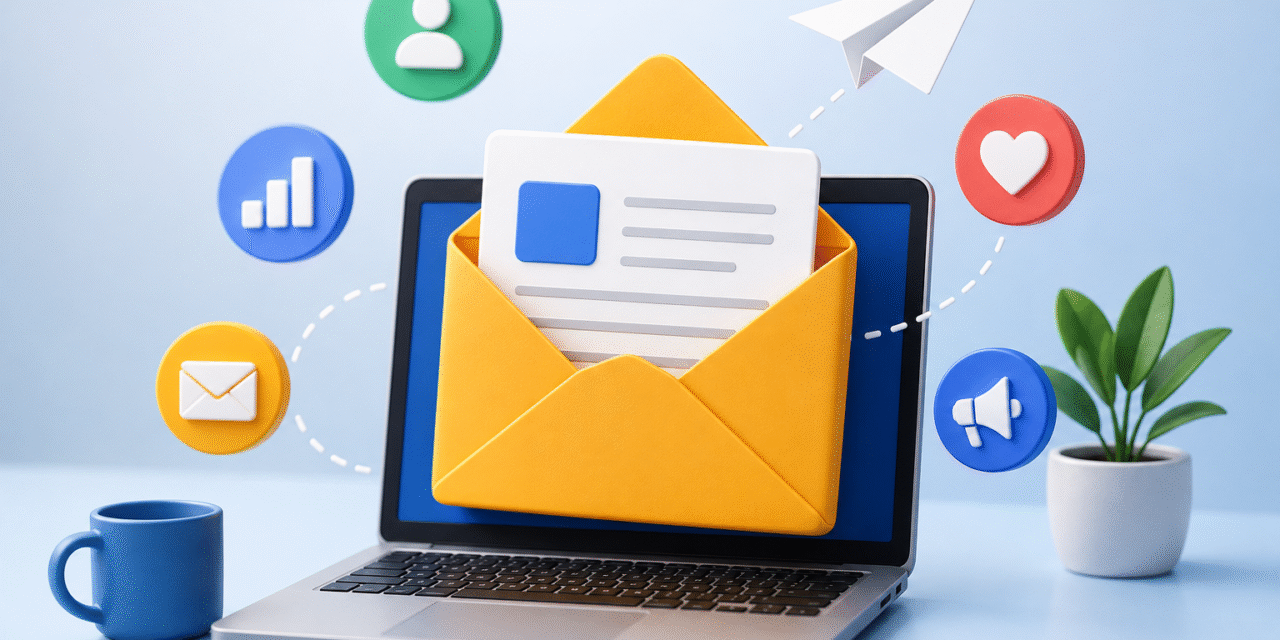
If you’re running campaigns in 2026, you’ve probably wondered: is email marketing still effective, or has it been overtaken by newer channels like social media, SMS, and AI-powered chat assistants? It’s a fair question. Inboxes are more crowded than ever, attention spans are shorter, and new platforms seem to emerge every year promising to be the next big thing in customer engagement. But despite all that noise, the data tells a clear story — this channel remains one of the most reliable, high-ROI tools available to marketers today. In this post, we’ll break down why it continues to deliver results, where the skepticism comes from, and what separates a high-performing campaign from one that falls flat.
Is Email Marketing Still Effective in Today’s Digital Landscape?
Despite predictions of decline, email continues to outperform many other channels when it comes to return on investment. Study after study shows that for every dollar spent, this channel generates a return that rivals or exceeds paid search, paid social, and display advertising. That’s a remarkable track record for a technology that’s been around since the 1990s.
Part of the reason lies in ownership. Unlike social platforms, where algorithms control who sees your content and can change overnight, this channel gives brands a direct, unfiltered line to their audience’s inbox. When someone subscribes to your list, that relationship belongs to you — not to a third-party platform that can restrict your reach or shut down your account. That direct line, combined with increasingly powerful personalization and automation tools, is a major reason so many marketers keep asking is email marketing still effective — and keep arriving at the same answer: yes.
Beyond ROI and ownership, there’s also the matter of intent. People who open their inbox are usually in a different headspace than people scrolling social media. They’re checking messages, reading updates, and making decisions — which makes them more receptive to well-crafted offers, product updates, and educational content than a passive social media scroll ever could.
Why the Skepticism Exists
If the numbers are so strong, why do so many marketers question whether this channel still works? A few reasons come up again and again.
First, inboxes genuinely are crowded. The average professional receives dozens, sometimes hundreds, of emails a day, and standing out requires real effort. Second, some brands have leaned heavily on generic, one-size-fits-all blasts — sending the same message to their entire list regardless of interests, behavior, or purchase history. These campaigns tend to underperform, reinforcing the belief that the channel itself is losing steam.
Third, weak subject lines and poor list hygiene quietly sabotage a lot of campaigns. If your subject line doesn’t earn a click, or if your list is full of disengaged, outdated, or invalid addresses, your metrics will suffer even if your actual content is strong. In nearly every case, though, these are execution problems — not evidence the channel is fading. Businesses that treat their campaigns as an afterthought naturally see worse results than those that invest real strategy into them.
What Makes Campaigns Successful Today
So what separates high-performing senders from the rest? A few practices consistently show up among the best-performing brands:
- Segmentation. Instead of sending one message to your entire list, divide subscribers into groups based on behavior, purchase history, engagement level, or stated preferences. A returning customer and a first-time visitor shouldn’t receive the same message.
- Mobile-friendly design. The majority of messages today are opened on a phone. If your layout doesn’t render cleanly on a small screen, you’re losing engagement before your message even has a chance to land.
- Strong subject lines. This is your first — and sometimes only — chance to earn a click. Testing different phrasing, personalization, and length can meaningfully improve open rates over time.
- Automation. Welcome sequences, cart abandonment flows, birthday offers, and re-engagement campaigns can all run with minimal manual effort once set up, delivering timely, relevant messages without requiring a marketer to hit send every time.
- List hygiene. Regularly removing inactive or invalid addresses protects your sender reputation and keeps your engagement metrics accurate, which in turn improves deliverability for the subscribers who actually want to hear from you.
- Value-driven content. Campaigns that consistently deliver something useful — a discount, a piece of helpful information, an early product look — build trust over time. Subscribers who see real value are far more likely to stay engaged and convert when it matters.
- Testing and iteration. The brands that see the best long-term results treat their campaigns as an ongoing experiment, regularly testing subject lines, send times, layouts, and offers rather than assuming what worked last year will keep working forever.
How This Channel Compares to Other Marketing Options
It’s worth putting things in context. Social media offers reach and brand visibility, but engagement is largely dictated by ever-changing algorithms, and organic reach has steadily declined for years. Paid ads can drive fast results but come with rising costs and diminishing returns as competition for ad space increases. SMS marketing is immediate and hard to ignore, but it’s also more intrusive, easier to opt out of, and less suited to detailed or visually rich messaging.
By comparison, a well-run inbox campaign strikes a balance: it’s cost-effective, scalable, measurable, and doesn’t depend on paying a platform for visibility. That doesn’t mean it should be used in isolation — the strongest marketing strategies combine multiple channels, using each one for what it does best. But when businesses are forced to prioritize, this channel consistently proves worth the investment because of how directly it connects to revenue.
Looking Ahead
As AI tools become more integrated into marketing workflows, this channel is only getting smarter. Predictive send-time optimization, AI-generated subject line testing, and dynamic content blocks that adjust based on subscriber behavior are becoming standard features rather than premium add-ons. Interactive elements — polls, countdown timers, and embedded product carousels — are also making messages feel less static and more like mini experiences. Far from being replaced by newer technology, the channel is being enhanced by it — making campaigns more relevant and more effective than they were even a few years ago.
Looking further out, expect tighter integration between inboxes and other customer touchpoints. A subscriber’s website browsing behavior, app activity, and purchase history are increasingly feeding into the same automation systems that power these campaigns, allowing for messages that feel less like mass marketing and more like a genuinely helpful, one-to-one conversation.
Final Verdict: Is Email Marketing Still Effective?
So, is email marketing still effective? The evidence says yes — for businesses willing to segment thoughtfully, personalize genuinely, and design with real strategy rather than treating it as an afterthought. Rather than disappearing, the channel has simply matured alongside the rest of the digital landscape. Marketers who keep up with best practices, invest in clean data, and use the tools now available to them will keep seeing strong, measurable results from this channel for years to come.





Your writing style is so engaging and easy to read It makes it a pleasure to read your blog and…
I was more than happy to search out this net-site.I needed to thanks for your time for this excellent learn!!…
Usually I do not read article on blogs, but I would like to say that this write-up very compelled me…
Hello, i believe that i noticed you visited my website thus i came to “return the choose”.I'm attempting to find…
Thanks for sharing. I read many of your blog posts, cool, your blog is very good.