
If you’ve ever wondered how email marketing works, you’re not alone. It remains one of the most effective and affordable ways for businesses to reach their audience, build lasting relationships, and drive sales. Despite the rise of social media, chat apps, and other digital channels, email is still a direct line to your customers’ inboxes, offering a level of personalization and control that few other platforms can match. In this post, we’ll break down exactly how the process works, why it’s still so powerful, and how you can use it effectively for your own business.
What Is Email Marketing?
At its core, this strategy involves sending targeted messages to a group of people who have opted in to receive communication from a brand. These messages can include promotional offers, newsletters, product updates, event invitations, or educational content. Unlike cold outreach, the people on your list have typically given explicit permission to be contacted, which makes this channel one of the most respectful and effective ways to communicate with an audience.
The process starts with building a list of subscribers. This is usually done through sign-up forms on a website, lead magnets like free ebooks or discount codes, checkout opt-ins, or social media promotions. Once someone joins your list, they become part of an ongoing conversation that a business can nurture over time.
How Email Marketing Works: The Step-by-Step Process
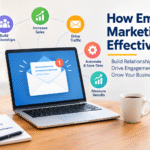
Understanding how email marketing works helps clarify why it’s so effective. Here’s a simplified breakdown of the typical workflow:
1. Building a Subscriber List
Everything begins with permission-based data collection. Businesses use forms, pop-ups, landing pages, and incentives to encourage visitors to share their email addresses. A clean, engaged list is far more valuable than a large but unqualified one, since sending messages to uninterested recipients can hurt deliverability and damage sender reputation.
2. Segmenting the Audience
Not every subscriber wants the same content. Segmentation divides a list into smaller groups based on factors like purchase history, location, engagement level, or demographic information. This allows businesses to send more relevant messages, which in turn boosts open rates and conversions.
3. Crafting the Message
Once the audience is segmented, the next step is creating compelling content. This includes writing a strong subject line (which determines whether the message gets opened at all), designing a clean layout, and including a clear call-to-action. Personalization—such as using the recipient’s name or referencing past purchases—can significantly improve engagement.
4. Automation and Triggers
Modern platforms allow businesses to set up automated sequences that trigger based on subscriber behavior. For example, a welcome series might fire automatically when someone joins a list, or an abandoned cart reminder might send a few hours after a shopper leaves items in their cart without completing checkout. Automation ensures timely, relevant communication without requiring manual effort for every single send.
5. Sending and Delivery
The message is then sent through an email service provider (ESP), which handles the technical side of delivery—routing messages through servers, avoiding spam filters, and ensuring they land in the inbox rather than the junk folder. Deliverability depends on factors like sender reputation, list hygiene, and compliance with regulations like CAN-SPAM or GDPR.
6. Tracking and Analytics
After a campaign goes out, businesses monitor key metrics such as open rates, click-through rates, conversion rates, bounce rates, and unsubscribe rates. This data reveals what’s working and what isn’t, allowing for continuous refinement of future campaigns.
Types of Campaigns You Can Run
There are several common formats businesses use to stay connected with their audience:
- Newsletters – Regular updates that keep subscribers informed about company news, blog posts, or industry trends.
- Promotional Emails – Announcements about sales, discounts, or limited-time offers designed to drive immediate action.
- Welcome Series – A sequence of messages sent to new subscribers to introduce them to a brand.
- Abandoned Cart Emails – Reminders sent to shoppers who left items in their online cart without purchasing.
- Re-engagement Campaigns – Messages aimed at winning back subscribers who haven’t interacted in a while.
- Transactional Emails – Order confirmations, shipping updates, and receipts triggered by a specific customer action.
Once you understand how email marketing works at a foundational level, mixing these formats becomes much easier to plan around your customer journey.
Key Benefits
There are several reasons this channel continues to be a favorite among marketers:
- High ROI: For every dollar spent, this channel consistently delivers one of the highest returns of any marketing method.
- Direct Access: Messages land directly in a subscriber’s inbox, without competing algorithms deciding who sees them.
- Personalization: Segmentation and dynamic content allow for highly tailored messaging.
- Measurable Results: Detailed analytics make it easy to test, learn, and improve over time.
- Ownership: Unlike social media followers, an email list is an asset a business fully owns and controls.
Best Practices for Success
To get the most out of this channel, consider the following tips:
- Write compelling subject lines that spark curiosity or highlight clear value.
- Keep your list clean by removing inactive or invalid addresses regularly.
- Test everything—from subject lines to send times—using A/B testing.
- Optimize for mobile, since a large percentage of emails are opened on phones.
- Respect frequency, avoiding so many sends that subscribers feel overwhelmed.
- Always include an easy unsubscribe option to stay compliant and maintain trust.
Final Thoughts
Now that you know how email marketing works—from building a list to crafting personalized messages and analyzing results—you can see why it remains a powerful tool for connecting with customers and driving measurable business growth. By understanding the full process—list building, segmentation, automation, delivery, and analytics—businesses of any size can create campaigns that genuinely resonate with their audience and deliver consistent, long-term results.




Your writing style is so engaging and easy to read It makes it a pleasure to read your blog and…
I was more than happy to search out this net-site.I needed to thanks for your time for this excellent learn!!…
Usually I do not read article on blogs, but I would like to say that this write-up very compelled me…
Hello, i believe that i noticed you visited my website thus i came to “return the choose”.I'm attempting to find…
Thanks for sharing. I read many of your blog posts, cool, your blog is very good.